Ready for Launch: Meet Baby Bird, Flying on the Transporter-18 Rideshare Mission
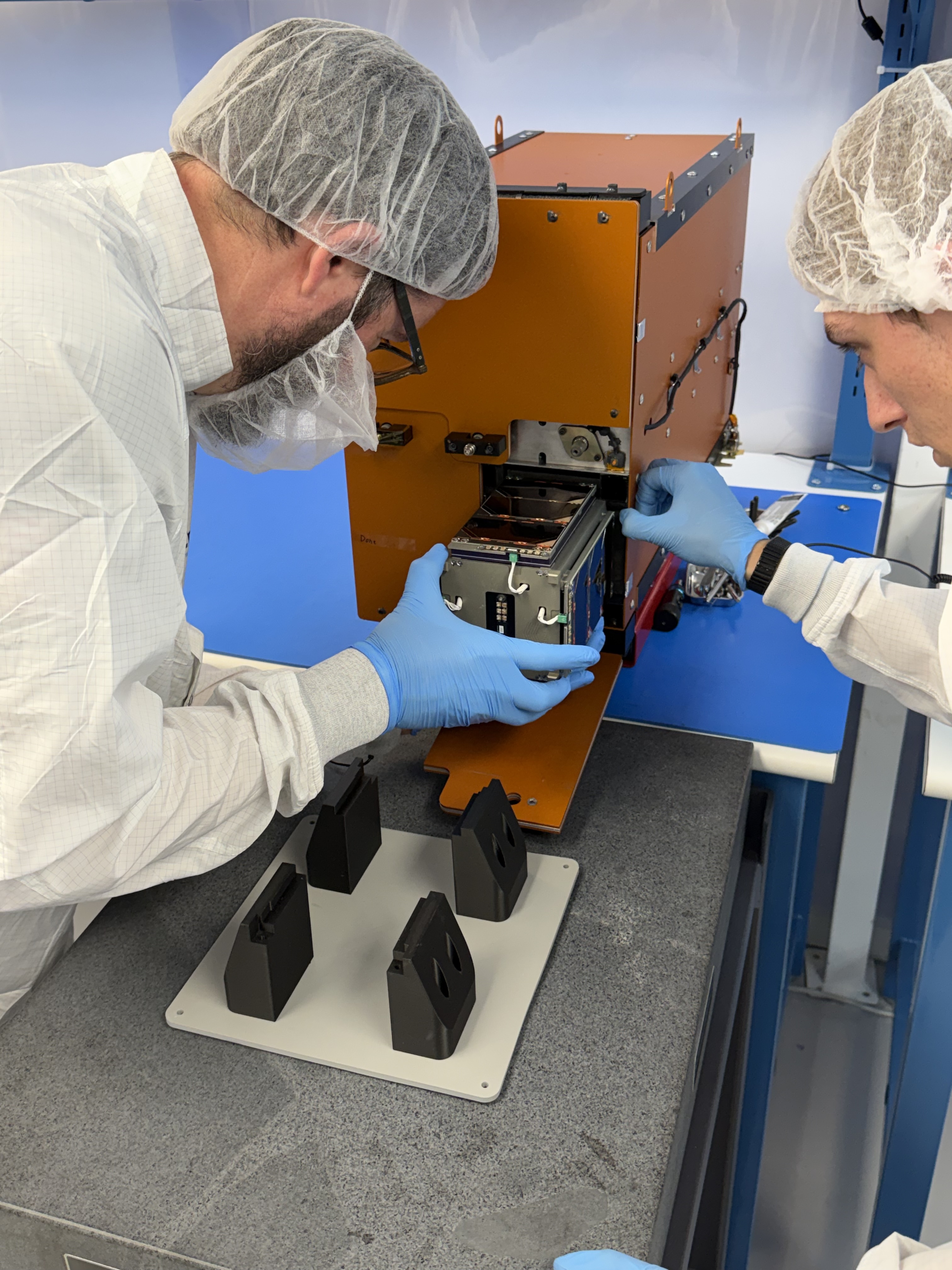
We’re excited to report that all of the customer spacecraft SEOPS integrated for the Transporter-18 rideshare mission with SpaceX are flight-ready and awaiting launch. The Falcon 9 mission is currently targeted for next month from Space Launch Complex 4E (SLC-4E) at Vandenberg Space Force Base in California.
Transporter-18 is a great example of what makes rideshare so powerful: it brings together spacecraft, technologies, and customers from around the world on a single mission. The SEOPS manifest reflects that global reach, with spacecraft from Japan, Italy, Paraguay, and the United States. For this mission, SEOPS integrated spacecraft ranging from a 1.5U CubeSat to a large microsatellite, using its flight-proven Equalizer deployer and other industry-standard separation systems.

Among the spacecraft preparing to fly is Blackwing Space’s Baby Bird, the company’s inaugural orbital mission and the first flight of its Sparrow nanosatellite platform.
“Rideshare is helping make access to orbit more flexible and accessible, but getting a spacecraft to the launch pad still requires a tremendous amount of coordination and expertise,” said Paul Anderson, Founder and CEO of Blackwing Space. “SEOPS has been an important part of that process for Baby Bird, helping us navigate the integration and deployment requirements so our team can stay focused on the mission and our customers.”
Meet Baby Bird
Baby Bird is designed to demonstrate Blackwing Space’s ability to rapidly bring multiple commercial payloads to orbit on a standardized, modular nanosatellite platform. The approach gives customers a path to test or operate their own technologies in space without having to develop an entire spacecraft from the ground up.
Baby Bird will carry payloads from Manifest Space, Celestis Memorial Spaceflights, and Melagen Labs, bringing three distinct customer missions together on a single platform.

The mission’s primary technology demonstration is Manifest Space’s optical beacon payload, an independent system designed to provide a persistent, externally verifiable signal of a satellite’s identity and position.
Manifest Space began working with Blackwing Space while the payload was still a concept. In just five months, the team progressed from spacecraft integration and testing to flight readiness. Once on orbit, Manifest Space plans to observe the beacon using ground-based telescopes and space-based observations, demonstrating a new approach to spacecraft identification that could support space traffic awareness.
For Blackwing Space, Baby Bird represents more than a single mission. It demonstrates the company’s broader model: providing the nanosatellite platform, payload integration, licensing, launch coordination, and mission operations support while allowing customers to concentrate on their own payloads and objectives.
The mission establishes a repeatable foundation for future commercial, government, and technology-demonstration missions on Blackwing Space’s standardized nanosatellite platforms — helping create a faster, more accessible path for customers to move hardware and software from development to orbit.
Making the Rideshare Model Work
That kind of mission flexibility depends on a network of companies working together behind the scenes. For SEOPS, the job is to help turn spacecraft that are ready for flight into spacecraft that are ready to fly together — safely, reliably, and on schedule.
“Every rideshare mission brings its own combination of spacecraft, deployers, interfaces, and mission requirements,” said Sabrina Kearney, Vice President of Mission Management and Integration at SEOPS. “Our role is to make that complexity as seamless as possible for our customers. Seeing Baby Bird move from integration to flight readiness is a great example of how strong partnerships across the space industry can accelerate the journey from an idea on the ground to a mission in orbit.”
At SEOPS, we’re proud to support missions like Transporter-18 and the customers making them possible. Every spacecraft has a different story, a different objective, and a different team behind it — but they all share the same goal: reaching orbit and delivering impact.
We look forward to seeing Baby Bird and the rest of the SEOPS-integrated spacecraft begin their journeys when Falcon 9 lifts off from Vandenberg next month.