Buccaneer Main: Enabling Australia’s Return to Sovereign Spaceflight
In March 2025, the Australian Defence Science and Technology Group (DSTG) successfully launched Buccaneer Main, a fully operational, Australian-made nanosatellite, aboard SpaceX’s Transporter-13 rideshare mission. The launch marked a historic milestone: Australian Defence’s key research and development body, DSTG, returning to sovereign satellite missions for the first time since 1967 through the Buccaneer Program.
The mission’s success was enabled by a close partnership with SEOPS, whose deep experience in launch integration, SpaceX processes, and dispenser systems provided DSTG with the confidence and operational assurance needed for a high-stakes national mission.
“This was a brand-new program for us. There was a great deal riding on it, and it was critical we got it right,” said David Lingard, Group Leader for Space Autonomy, DSTG & Buccaneer Main Mission Manager.
Buccaneer Main demonstrates SEOPS’ ability to support first-time and returning government space programs, manage regulatory and integration complexity, and deliver reliable access to orbit through trusted launch partnerships. Ultimately, SEOPS provided DSTG with what mattered most: confidence, collaboration, and ultimately, mission success.

Mission Background: Buccaneer Main
Buccaneer Main is the second CubeSat under DSTG’s Buccaneer Program, following the successful Buccaneer Risk Mitigation Mission launched in 2017. The earlier mission tested key technologies and reduced risk for the Main mission, which launched as a 6U CubeSat with ambitious experimental objectives.
Since launch, Buccaneer Main has exceeded expectations:
- Communications were established on the first orbital pass
- Fully automated ground station communications were achieved within hours
- The satellite has completed over 80 successful data collections with the primary payload
- All primary mission objectives have been demonstrated, with secondary and stretch objectives now underway
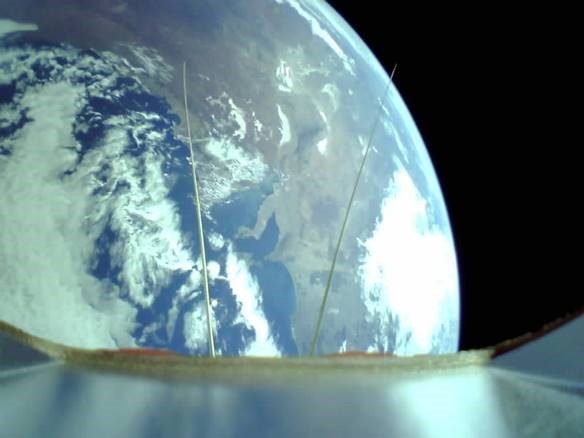
In fact, just one month after launch, the satellite successfully deployed its 3.2-meter cross-shaped high-frequency antenna—more than ten times the spacecraft’s own length—demonstrating advanced deployable structures in orbit.
Advanced Payloads, Big Goals
Buccaneer Main carries a suite of cutting-edge, sovereign payloads designed and integrated by DSTG:
- High-Frequency Science: The primary payload collects high-frequency measurements in low Earth orbit to study ionospheric radio-frequency propagation.
- MANTIS (Maneuverable ANtenna and Terrestrial Imaging System): A re-deployable robotic arm with a dual-surface mirror used for both self-imaging and Earth imaging—essentially a space-qualified “selfie stick.” This payload advanced DSTG’s understanding of space robotics and deployable mechanisms. The payload also demonstrates the first known use of a liquid lens in space, enabling electronic focus control without mechanical components.
- Optical Communications Payload: A laser communications experiment, supported by the U.S. Space Force, testing precision pointing and attitude control with an optical ground station in Adelaide.
- Additional Systems: An Iridium transceiver is also onboard, along with an autonomy experiment focused on automated tasking for Earth imaging.
Why SEOPS: Trusted Expertise for a First-of-Its-Kind Mission
DSTG accessed the launch opportunity through the multinational Responsive Space Capabilities Memorandum of Understanding (MOU), working with the U.S. Space Force’s Space Test Program (STP). STP selected SEOPS as the preferred launch services provider—a recommendation that proved decisive.
“We were keen to fly on a vehicle with deep heritage after previous launch opportunities disappeared. SpaceX Transporter missions offered reliability, and SEOPS came highly recommended—and that combination turned out to be critical to our success,” commented Lingard.
After picking up the spacecraft in Los Angeles, the DSTG team drove north to Maverick Space Systems’ integration facility in San Luis Obispo, where they met the SEOPS team.
“SEOPS was ready when we arrived. All the equipment was there, everything set up for us. We completed functional testing in about half a day,” said Paul Alvino, head of Spacecraft AI&T for DSTG. “It couldn’t have gone smoother.”
SEOPS’ value extended well beyond physical integration:
- SpaceX Process Expertise: When spectrum licensing issues arose late in the campaign, SEOPS worked directly with DSTG to compile documentation and navigate SpaceX’s requirements. “With their years of experience working with SpaceX on missions, they knew exactly what SpaceX cared about. That knowledge saved a lot of time and stress,” commented Alvino.
- Collaborative Problem-Solving: Throughout the test campaign, the SEOPS mission team of Carl Campbell, Jeff Fitch, and Brady Lind worked side by side with DSTG as an extension of the team. “Our pre-launch meetings were really collaborative problem-solving sessions. SEOPS really became part of our team, that they were vested in our success,” Alvino added.
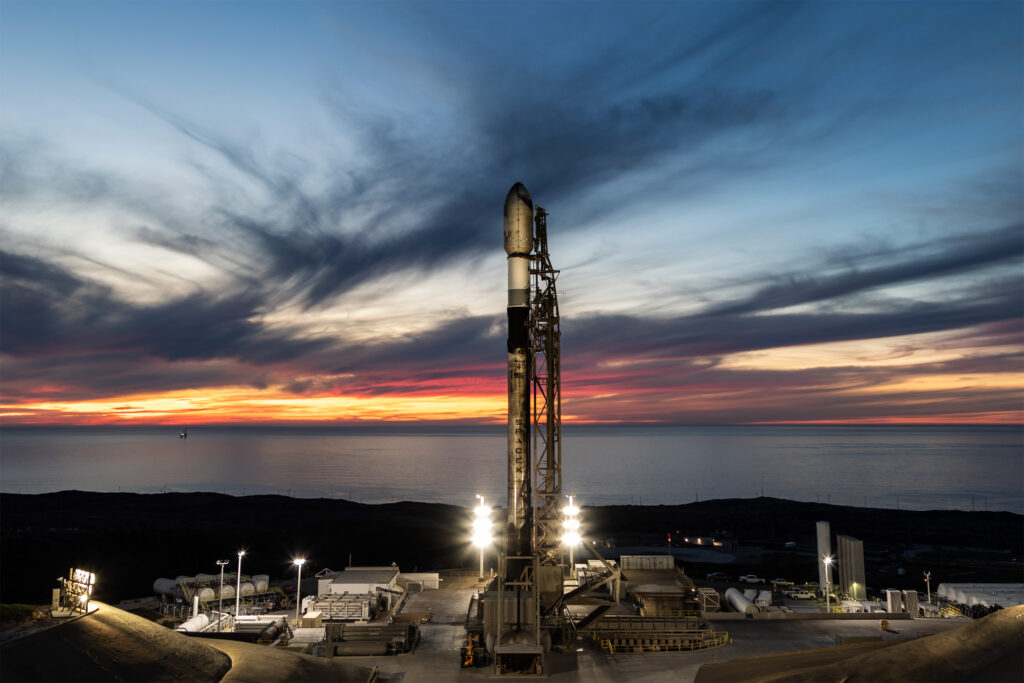
- Proven Deployment Confidence: Buccaneer Main flew in the SEOPS Equalizer Deployer, sharing the 12U dispenser with another spacecraft. SEOPS handled final integration and delivery to SpaceX’s Vandenberg facility. “SEOPS brings so much deployment experience, it really was an easy choice to use their deployer too,” said Alvino. “Having a functionally rich satellite that doesn’t deploy properly in space defeats the whole purpose, and we were confident in the engineering prowess of their hardware.”
Flawless Launch, Lasting Impact
On launch day in March 2025, Buccaneer Main deployed successfully and began operations immediately. Eight months on, the mission continues to deliver high-quality data and valuable lessons for Australia’s defence and space industry.
“While we learned a great deal about shipping a sovereign spacecraft and regulatory issues during this mission, the part we didn’t have to worry about was launch,” added Lingard. “Thanks to STP and SEOPS, we left that to them. While we focused on our spacecraft, they handled the rest.”
The knowledge gained from Buccaneer Main will inform future defence space capabilities and be shared with Australian industry. DSTG is already contributing expertise to a larger civilian mission being led by Optus, further strengthening Australia’s sovereign space ecosystem.
“The Australian space sector is on the rise. Missions like Buccaneer show what’s possible with the right partners,” Lingard added.